
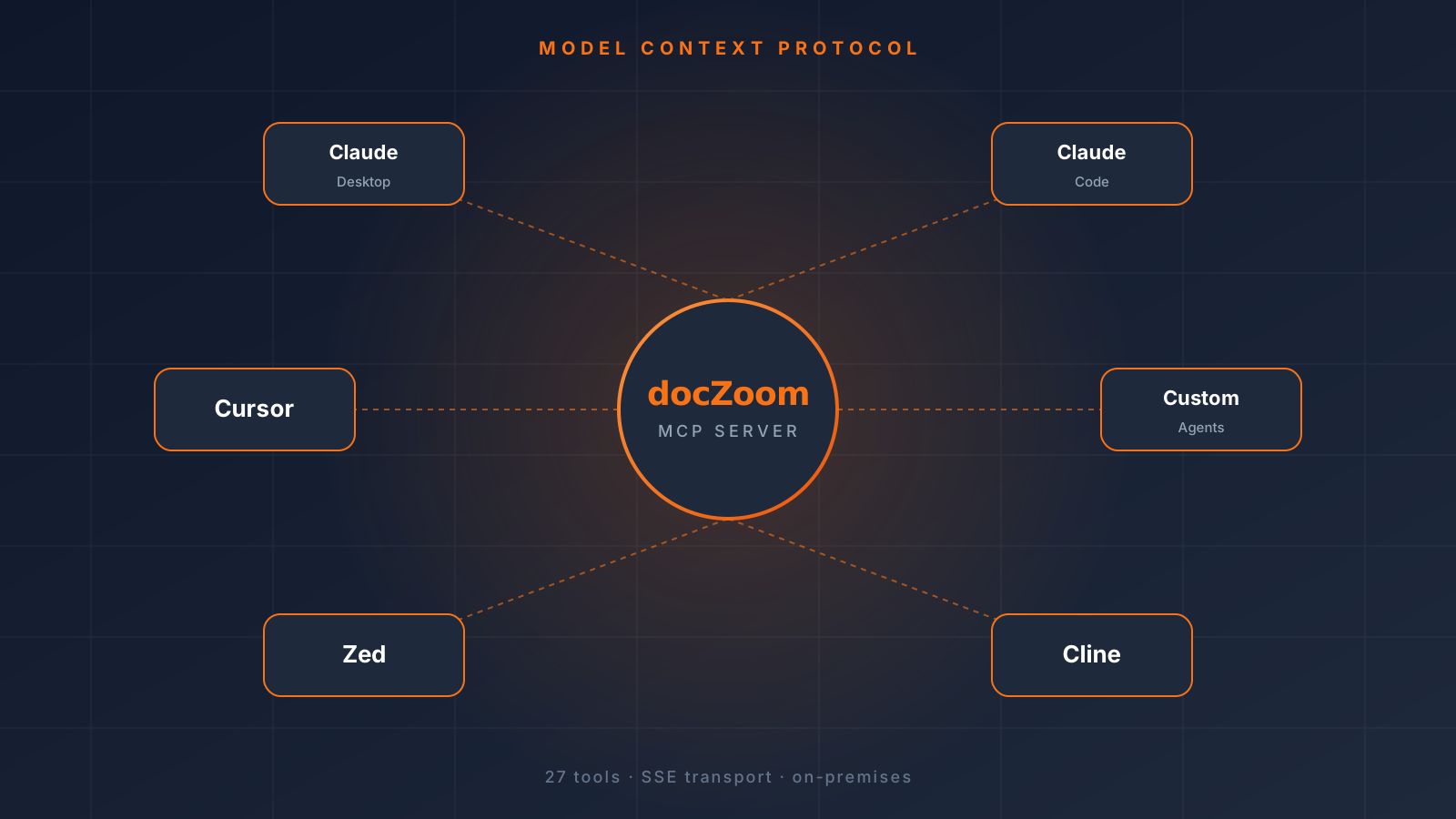
A new standard has shown up in the AI ecosystem over the last few months · MCP, the Model Context Protocol. It's the open standard launched by Anthropic, adopted in record time by Claude Desktop, Cursor and a long list of AI assistants. The idea is simple but powerful: one protocol to connect any model to any data source or business system, without writing custom integrations every time.
Starting this week, DocZoom is one of the first document management systems with native MCP support. That means your entire archive · documents, contracts, email, knowledge graph · is now a "plug" that any AI assistant can connect to and query. In this article I'll try to describe what changes in practice, without going into the technical weeds.
The idea, in two lines
An AI assistant, by itself, knows nothing about your corporate archive. To make it find a contract, read a clause, summarize an email thread, someone has to build the "pipe" connecting the assistant to your data.
Before MCP, every pipe was custom · a different integration for every assistant, to write and maintain. With MCP the pipe is standard: you build it once and any assistant · the ones that exist today and the ones shipping tomorrow · finds it without further configuration.
DocZoom exposes its full archive through this standard.
What it's actually useful for
The most direct example.
A law firm. A lawyer opens Claude Desktop on their laptop and types: "Find all contracts with penalty clauses above 5% expired in Q1 2026, and draft a memo for the affected clients." Claude connects to the firm's DocZoom archive, searches, finds, reads, summarizes, writes · with precise citations to the documents. Everything stays inside the firm's perimeter: data never leaves the customer archive.
An accounting firm. An accountant asks their AI assistant: "Show me 2025 supplier invoices with VIES-verified VAT numbers above 10,000 euro." The assistant searches across entities and documents, cross-references, returns the right files. The answer isn't a generic summary but a concrete list, with direct links to the documents.
A compliance team. Every Monday a scheduled agent reviews the week's new documents, identifies the people mentioned, cross-checks against GDPR policy and sends the DPO a report if it finds anomalies.
In all cases: the AI assistant is whichever the customer prefers. The archive is DocZoom. The "standard" connecting them is MCP, and from the outside it feels like one fluid experience.
Why this is a paradigm shift
Until yesterday, automating something on top of your archive meant writing custom code and keeping it up to date. When a new AI assistant came out, the integration had to be redone.
With MCP, DocZoom becomes a default plug into any AI assistant, including the ones that don't exist yet. When a new client ships tomorrow, or when a customer wants to wire in a custom internal agent, no extra development is needed: the plug is already there, already authenticated, already logged.
The privacy piece
All the AI assistant's logic can run wherever the customer wants · on the laptop, on an internal server, on a cloud service the customer already chose. The DocZoom archive stays where it should be · EU GDPR-safe cloud as default, dedicated on-premises for tighter requirements.
In short: sensitive data doesn't leave the customer's perimeter, the intelligence connects from the outside. It's the long-standing DocZoom promise, extended to the new agentic world.
How to try it
For existing DocZoom customers, MCP is already included at no additional cost. To see it in action, request a demo and we'll show you Claude Desktop talking to a real, anonymized archive. Fifteen minutes is enough to understand what changes.
For the privacy-first architecture that makes all of this possible, see the Technology page.