
Here's a number that keeps coming back to me. According to several studies on corporate knowledge management, between 50 and 70 percent of an organization's operational knowledge lives in email. Not in contracts, not in the CRM, not in official policies. In email.
Threads with clients, offers exchanged over certified mail, attachments that never ended up anywhere else, decisions made in three lines on a Friday afternoon. Real, alive, operational knowledge · and almost always invisible to document systems.
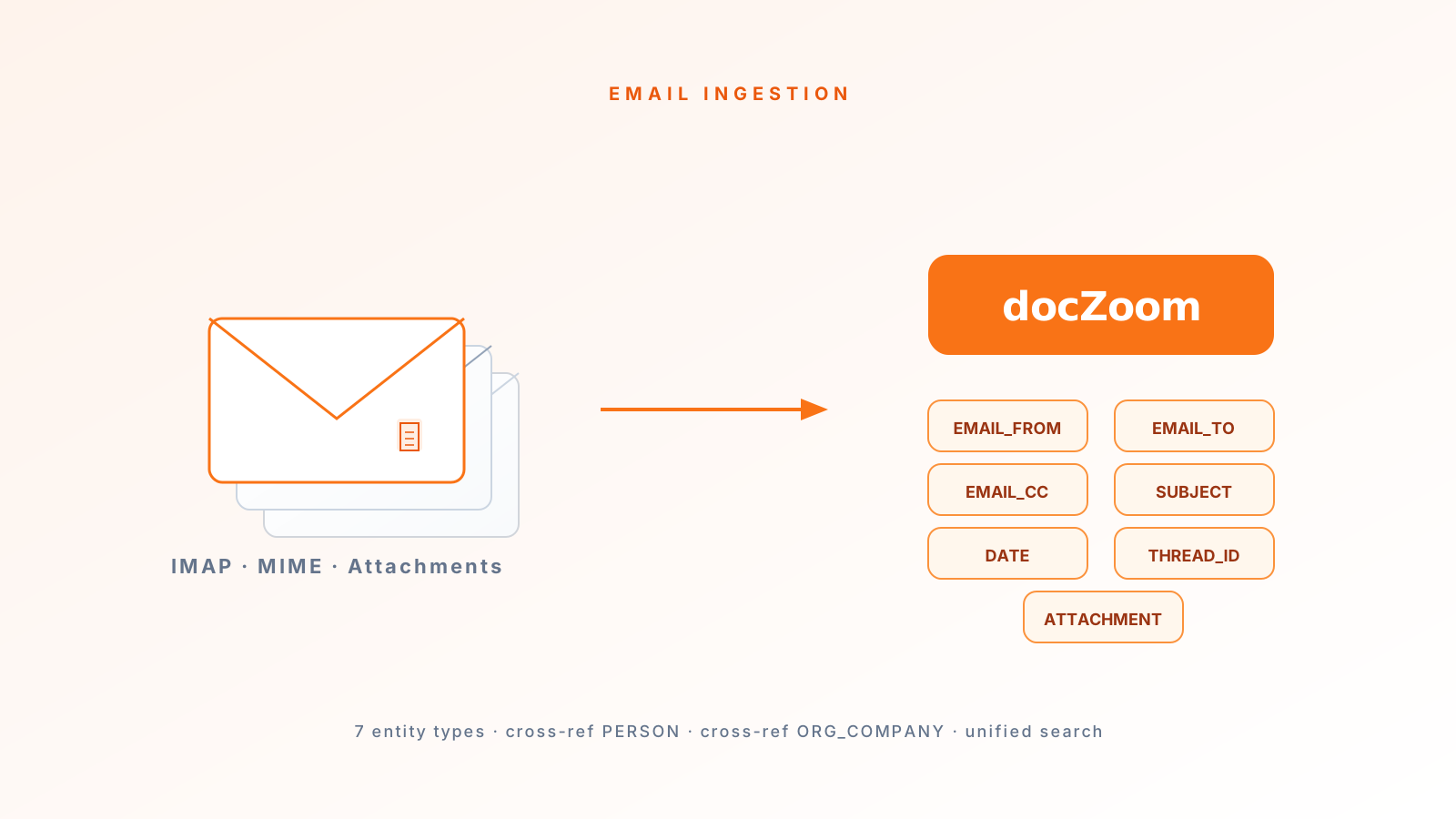
Starting this week DocZoom solves this: email becomes a first-class citizen of the archive, exactly like PDFs, Word docs, contracts.
Why email is hard
The temptation, when handling them, is to think of them as "documents with a bit less structure". That's wrong: email is three things at once.
- •A document · the message body, with its content.
- •A relationship graph · who writes to whom, when, in which thread.
- •A container of documents · attachments, often the actual content.
If a system only captures the first, you lose the graph. If it ignores the third, you throw away half the information. And if you don't reconstruct the full thread, a single out-of-context message can lead to a totally wrong answer.
That's why we built email ingestion as a dedicated module, with its own logic, and only afterward unified the result with the rest of the archive.
What changes for the people doing the work
The use case that closes the argument.
An accounting firm, 15 professionals, an archive of 180,000 documents plus 400,000 emails accumulated over ten years of work.
Before. A client writes: "what did we agree on the non-compete clause in the 2022 contract?" The professional hunted by hand. Opened the DMS, found the contract. Opened the inbox, searched the thread. Re-read ten messages to reconstruct the last negotiating position. Thirty to sixty minutes for one single question.
After. Same professional types the question into the DocZoom chat. The system finds the contract, retrieves the related email thread, reconstructs the chronology, and answers with precise citations to both the PDF and the email message. Three seconds.
The difference isn't "we added email to the archive". It's that the context is now complete: the official document and the conversation that produced it sit in the same place, queryable together.
What "email as a first-class document" means in practice
Three things, concretely.
A contact network that builds itself. Senders are recognized as people, domains as companies. Your professional network forms automatically from the headers of the email you receive, woven together with the contracts, projects and customers already in the archive.
Attachments always archived. Attachments don't stay buried inside a mailbox · they're extracted as real files, indexed, searchable like any other document, and linked back to the origin message.
Unified search. One single question crosses contracts, invoices, company records AND the related email conversations. No more hunting between DMS and inbox · one interface, one context.
Privacy and compliance: same principle as always
The expected objection: "but if DocZoom reads my mailbox, where does the data end up?"
Answer: where all other DocZoom data ends up · inside your perimeter. EU GDPR-safe cloud as default, dedicated on-premise for tighter requirements. Email credentials are encrypted. Messages, bodies, attachments don't leave the EU perimeter. The entity-recognition pipeline (people, companies, fiscal codes, VAT) uses the same local model that processes your contracts, with the same rules.
For GDPR this is a critical point: many cloud "email AI" solutions end up shipping the full message bodies to third-party servers for analysis. With DocZoom that doesn't happen. Period.
Available from today
The email module is included for all DocZoom customers with an active contract, with no expected downtime. From the admin UI you configure the accounts, the first sync runs on historical volumes, and from there everything updates incrementally.
To see it work on a real mailbox, request a demo.
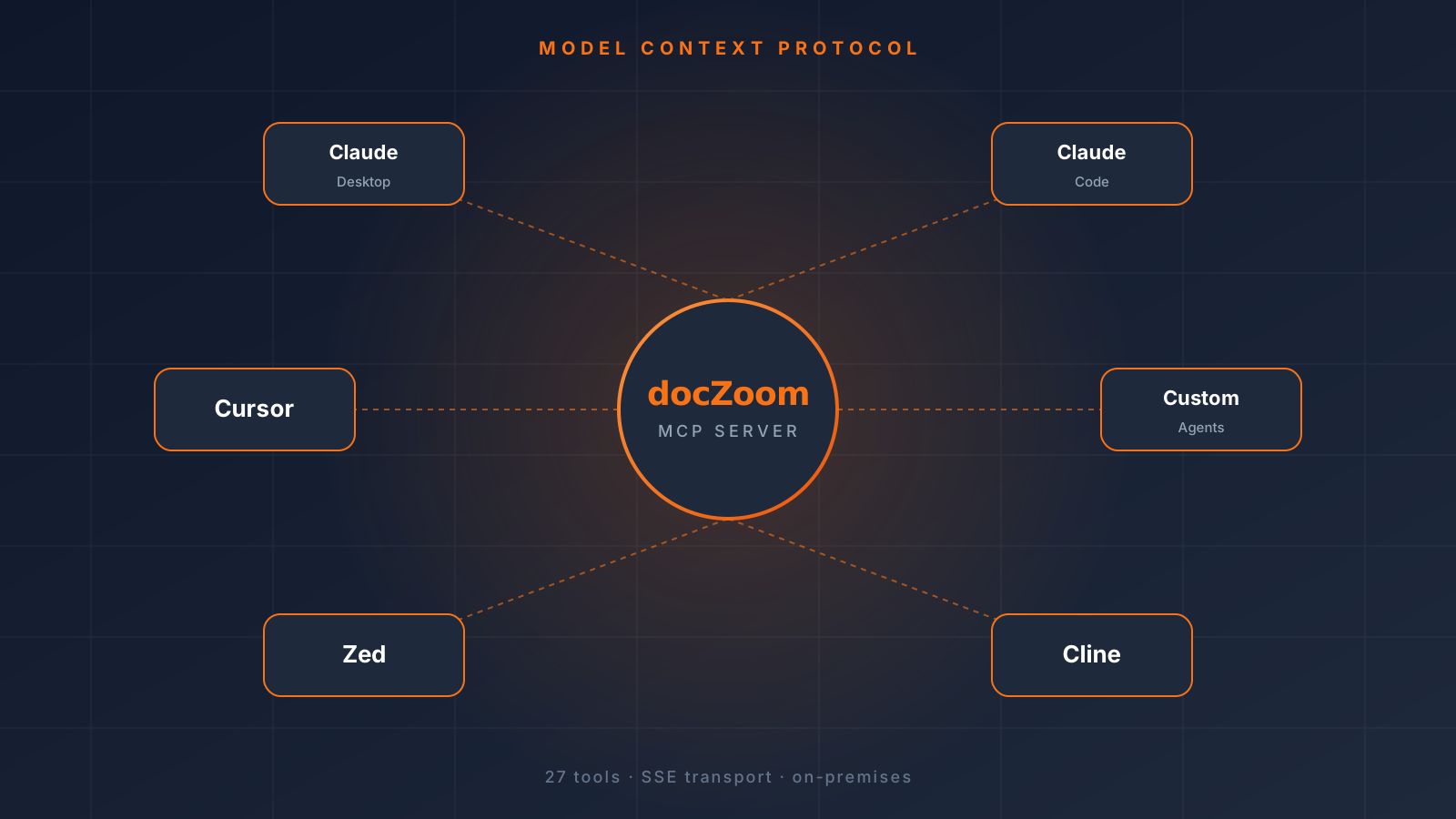
If you're also interested in the agentic side · the archive talking to Claude and other AI assistants · read the article on the DocZoom MCP server.